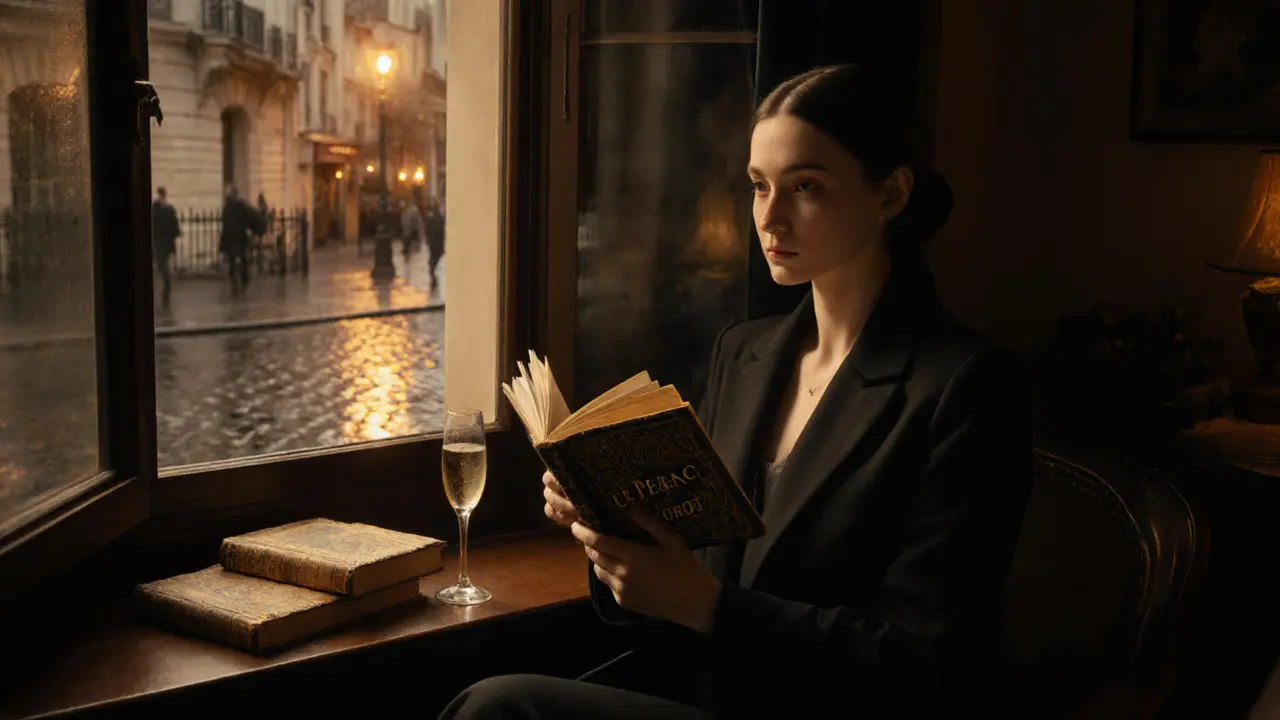
French Literature and Its Hidden Links to Paris Escort Culture
When you think of French literature, the rich tradition of novels, poetry, and essays that defined modern European thought and emotion. Also known as Parisian literary culture, it doesn't just live in libraries—it lived in the alleyways of Montmartre, the dim corners of left-bank cafés, and the quiet apartments where companionship was traded not for money alone, but for silence, understanding, and truth. This isn’t just about Balzac and Zola. It’s about the women and men who inspired them—the ones who sat across from writers at 3 a.m., listened to their fears, and became the uncredited muses behind some of the most honest portrayals of desire, loneliness, and power in Western writing.
Think of Paris escort culture, the long-standing, often hidden network of companions who offered more than physical presence—they offered intimacy, discretion, and cultural fluency. Also known as the Parisian companion class, it’s not a modern invention. It stretches back to the 1800s, when courtesans like La Castiglione moved between salons and bedrooms, shaping the social fabric that writers like Oscar Wilde and Charles Baudelaire wrote about. These weren’t caricatures. They were sharp, educated, and deeply aware of how society worked—and how it failed people who didn’t fit its rules. Their lives became the raw material for novels that dared to show the truth beneath the surface of elegance. The escort influence on literature, how real-life companions shaped the characters, themes, and emotional cores of classic and modern French writing. Also known as the muse effect, is undeniable. Manet’s paintings of women in Parisian interiors? They weren’t just models—they were women who knew how to hold a conversation, read a room, and disappear when needed. That same quiet power appears in the protagonists of Colette’s stories, the seductive figures in Proust’s memory, and the lonely women in Camus’s existential scenes. You can’t understand French literature without understanding the women and men who walked its streets with purpose, not shame.
And that’s why the posts you’ll find here aren’t just about services or prices. They’re about the legacy. The way bohemian Paris, the historic blend of art, rebellion, and unconventional living that made the city a magnet for free thinkers and those who lived outside norms. Also known as the Left Bank spirit, still lives in the 18th arrondissement, where escorts today still know the best hidden bars, the quietest corners of the Luxembourg Gardens, and how to turn a walk through Montmartre into something unforgettable. This isn’t fantasy. It’s continuity. The same city that gave us Flaubert’s Madame Bovary now gives us escorts who read Proust, quote Simone de Beauvoir, and know when to speak and when to let silence speak louder.
What you’ll find below isn’t a list of ads. It’s a collection of real stories—about how economics, law, fashion, and history shape the people who walk these paths today. You’ll read about luxury, safety, legality, and the quiet dignity of a profession that’s been misunderstood for centuries. And if you’ve ever wondered why French literature still feels so alive, it’s because the city it was born in never stopped telling its stories—just in different voices, and often in the dark, where the truth is easiest to hear.