
Paris has long been a city of romance, art, and rebellion-and for centuries, it’s also been a hub for sex work. The escort industry here didn’t start with modern apps or Instagram DMs. It began in the shadowed alleys of medieval Paris, evolved through the glitter of the Belle Époque, survived wartime crackdowns, and now operates in a legal gray zone that’s more complex than most people realize.
Medieval Roots: From Courtesans to Clandestine Meetings
In the 13th century, Paris had officially sanctioned brothels called houses of pleasure, regulated by the city and taxed by the crown. These weren’t hidden-they were located near the Seine, often near markets or universities, and staffed by women who had few other options for survival. Some were former servants, widows, or daughters of poor families. Others were foreign women brought in by traders or soldiers.
By the 15th century, the Church pushed back hard. King Charles VII shut down most brothels in 1412, but enforcement was spotty. Women kept working in private homes, inns, or disguised as seamstresses or laundresses. The line between escort and prostitute was never clear-what mattered was discretion. Parisians valued subtlety. Even then, the city’s reputation for seduction was built on this underground economy.
The Belle Époque: Glamour Meets Grit
The late 1800s changed everything. Paris exploded with cafés, cabarets, and theaters. The Moulin Rouge opened in 1889. Artists like Toulouse-Lautrec painted women who worked the streets near Montmartre. These weren’t just sex workers-they were icons. Some became celebrities. Others were trapped.
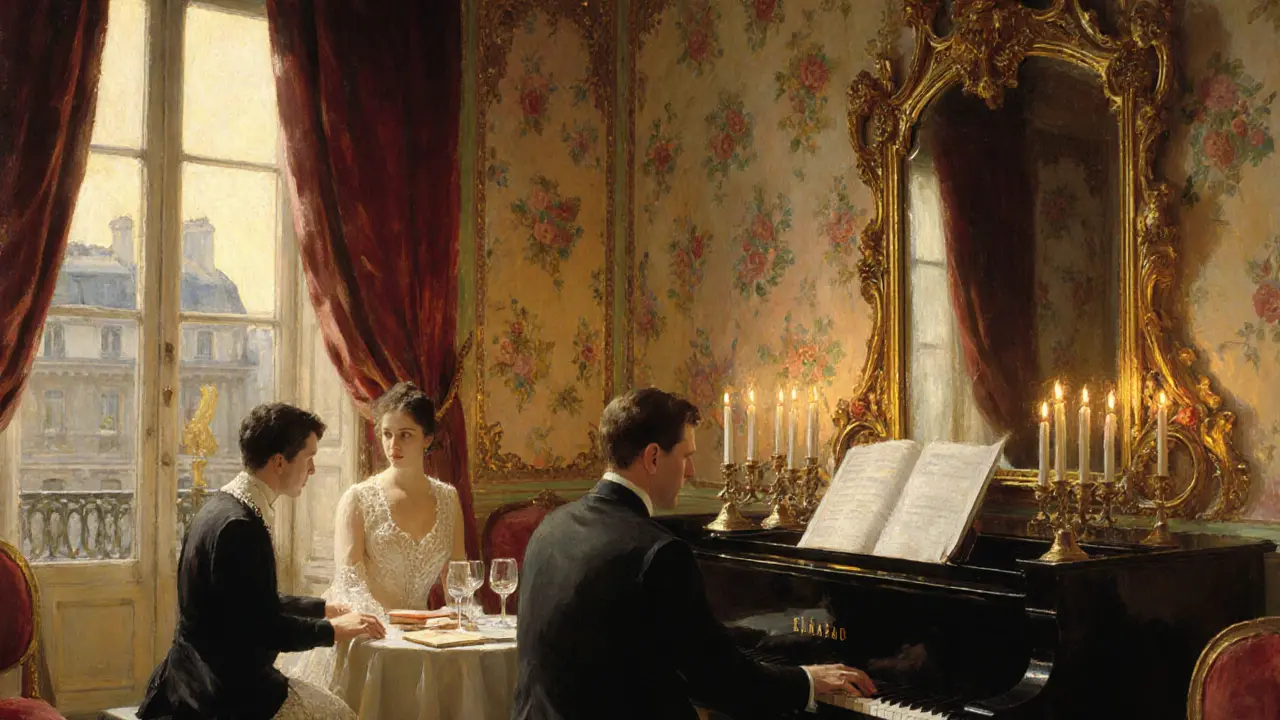
During this era, escorts often worked through salons or private appointments. Wealthy clients-diplomats, artists, industrialists-paid for companionship as much as sex. A good escort knew how to converse in French, English, and German. She might read poetry, play piano, or wear couture. The industry wasn’t just about physical service; it was about performance, status, and social access.
Madams ran these operations like small businesses. They hired girls, trained them, rented apartments, and handled payments. Some madams became rich. One of the most famous, La Païva, turned her escort business into a palace on the Champs-Élysées. She hosted royalty and was rumored to have been the lover of Napoleon III’s cousin.
1946: The Abolition Law and the Underground Shift
In 1946, France passed the Loi Marthe Richard, which banned brothels and pimping. It was framed as a moral victory for women’s rights. But the law didn’t end sex work-it pushed it underground.
After the law, street prostitution in Paris became a target for police raids. Women were fined, arrested, or deported. But demand didn’t disappear. Instead, it moved indoors. Apartments in the 9th, 16th, and 18th arrondissements became discreet meeting spots. Women started advertising in newspapers under coded language: “companion for evening,” “cultural evening,” “tea and conversation.”
By the 1970s, phone lines replaced newspaper ads. Women used payphones to screen clients. They developed safety routines: meeting in public first, checking IDs, never going to unknown locations alone. These practices still exist today.
Modern Paris: Apps, Legal Ambiguity, and the Rise of Independent Escorts
Today, the escort industry in Paris is mostly independent. There are no brothels. Pimping is illegal. But advertising, soliciting, and receiving payment for sex aren’t crimes-only organizing or profiting from someone else’s work is.
That legal gray area created a new kind of escort: the solo operator. Many are students, artists, or expats. Some work part-time to pay rent. Others make six figures a year. They use apps like OnlyFans, private websites, or encrypted messaging. No agencies. No madams. No middlemen.
Most operate in quiet neighborhoods-Passy, Batignolles, Saint-Germain-des-Prés. They don’t walk the streets. They don’t flash signs. Their clients find them through word of mouth or curated profiles. Photos are tasteful. Descriptions focus on companionship: “I enjoy long walks in Luxembourg Gardens,” “I read Camus and listen to jazz.”
Police rarely interfere unless there’s a complaint. In 2023, only 12 arrests related to escort work were made in Paris-mostly for fraud or underage involvement. The real threat isn’t law enforcement. It’s online scams, fake profiles, and clients who refuse to pay.

Why Paris Still Holds a Unique Place
Paris isn’t like Amsterdam, where sex work is openly licensed. It’s not like Nevada, where brothels are legal and regulated. Paris has no official system. Yet, it’s one of the most active markets in Europe.
Part of that is cultural. French society separates sex from morality more than most Western countries. There’s no shame in paying for company. Many clients are married men seeking emotional connection, not just sex. Women who work in the industry often say they’re valued for their intellect, not just their bodies.
There’s also the tourism factor. Paris draws millions of visitors every year. Some come for the art. Others come for the fantasy. And some come looking for a private, intimate experience away from home.
Unlike in other cities, Parisian escorts rarely advertise as “prostitutes.” They call themselves companions, hosts, or concierges. The language matters. It protects them legally and socially.
The Future: Technology, Regulation, and Human Rights
Paris is at a crossroads. Younger women entering the industry now are more tech-savvy and financially literate than ever. They use digital wallets, crypto payments, and AI tools to screen clients. Some even run podcasts or YouTube channels about their experiences.
But the risks haven’t gone away. Human trafficking still exists. Some women are forced into the industry by organized groups. Others are exploited by fake agencies that take their earnings.
Advocacy groups like Collectif des Femmes en Situation de Prostitution are pushing for decriminalization-not legalization. They want sex workers to be able to report abuse without fear of arrest. They want access to healthcare, housing, and legal support.
France’s government has shown little interest in reform. But public opinion is shifting. A 2024 survey found that 58% of Parisians believe sex work should be treated as a job, not a crime. That number jumps to 72% among people under 35.
The history of escort work in Paris isn’t just about sex. It’s about survival, autonomy, and the quiet ways people carve out dignity in a society that often refuses to see them.